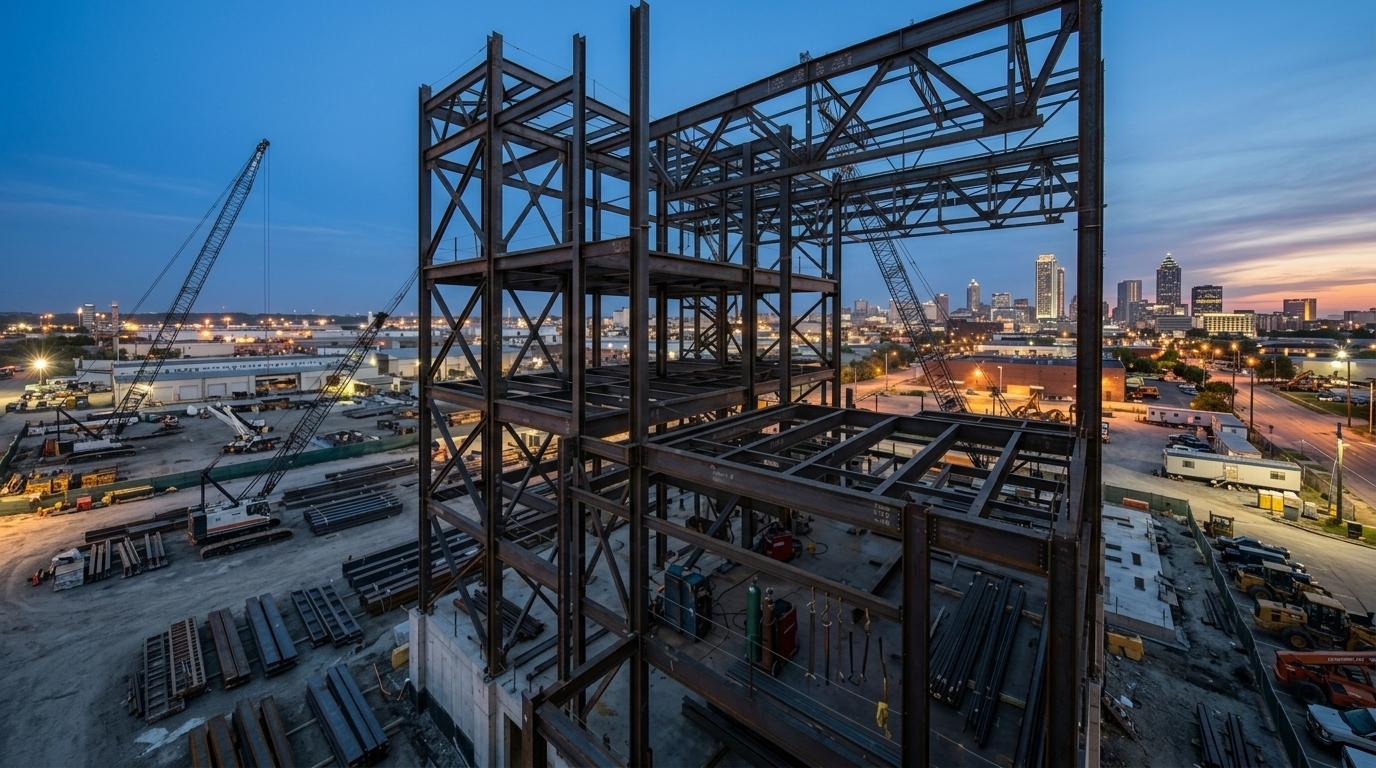



The steel takes shape in the shop, and the estimate meets reality. Plates that were not on the bid set. Weld types the detailer specified differently than the estimator assumed. Material substitutions driven by mill availability. Every variance between the takeoff and what actually gets fabricated is either a change order conversation, an absorbed cost, or a lesson that improves the next bid.
Most shops only capture the first two. The takeoff gets filed away once the bid is submitted, fabrication proceeds on redetailed drawings the estimator never sees, and the variances that could have sharpened future estimates disappear into project files. Reconciliation is the discipline that closes that loop: systematically comparing what was estimated against what was built, quantifying the variances, and feeding the findings back into templates, checklists, and labor factors.
This article walks through why the takeoff-fabrication gap exists, the five-step reconciliation cycle that closes it, and where AI takeoff tools support the comparison and tracking work.
This article sits under Building a High-Performance Steel Estimating Workflow and is the feedback-loop companion to the broader workflow design covered in the pillar.
Why the Gap Between Takeoff and Fabrication Exists
Four structural causes produce most of the variance between what estimators count and what shops build.
Disconnected teams. Estimators and fabricators rarely collaborate during takeoff. The shop floor knows which connections are harder to build than the drawings suggest, which details consistently get revised during detailing, and which material substitutions are likely given current availability. Without a structured channel, that knowledge never reaches the estimate.
Static takeoff data. Once the takeoff exports to a spreadsheet and the bid goes out, the data freezes. Detailing changes, RFI responses, and shop discoveries accumulate on the fabrication side without ever updating the estimating side. There is no feedback loop unless someone builds one.
Detailing versus design differences. This gap is structural to how steel projects work. The design drawings in the bid set do not carry fabrication-level detail. The ANSI/AISC 303-22 Code of Standard Practice governs exactly this relationship: the fabricator’s detailer produces shop drawings that add weld access holes, splice locations, connection details, and erection aids that the design drawings never showed. An estimate built from the bid set will always differ from the shop drawings in some measure. The question is whether the shop tracks that difference systematically or discovers it as a surprise.
Manual comparison. Reconciling a takeoff against shop drawings line by line is tedious, and tedious work under deadline pressure gets skipped. Changes get buried in emails and markups instead of captured in a structured record.
What the Gap Costs
The financial exposure is the same rework chain that runs through every estimating error. According to the Construction Industry Institute, rework represents between 2% and 20% of total project costs, with an average of 12%. Un-reconciled takeoff variances feed that chain directly: material ordered against outdated quantities, labor budgeted against assumptions the detailer overrode, and change orders negotiated from a weaker position because the variance was discovered late.
The CFMA Construction Financial Benchmarks Report shows industry net profit margins running around 5-6%, with specialty trades around 6.9%. At those margins, the shops that reconcile systematically hold onto profit that the shops running “set it and forget it” estimating give back one variance at a time.
There is a second cost that compounds quietly: every project that ends without reconciliation is a missed calibration opportunity. The shop’s labor factors, waste assumptions, and connection checklists stay frozen at whatever accuracy they had when someone last updated them. The estimating departments that improve year over year are the ones feeding actuals back into their assumptions after every job.
The Five-Step Reconciliation Cycle
Reconciliation is not a post-project report. It is a continuous cycle that runs from shop floor back to the next bid.
Step 1: Capture Fabrication Data
Decide what to track before the project starts, and collect it as fabrication proceeds rather than reconstructing it afterward.
- Material substitutions and the reason for each.
- Added welds, plates, and connection components that appeared during detailing.
- Connection changes between the bid set and the approved shop drawings.
- Shop-versus-field classification changes.
- Sequence impacts that affected labor.
The sources are the shop markups, the material takeoff reports from detailing, and the weld logs. None of this is new documentation. It is documentation the shop already produces, routed to the estimating department instead of stopping at the project file.
Step 2: Compare Against the Original Takeoff
With the fabrication data in hand, run the comparison against what was bid. The key questions:
- Did the takeoff miss plates, bolts, or stiffeners that detailing added?
- Were the labor assumptions accurate for the connection types on this project?
- Did material grades change between bid and fabrication, and why?
- Which categories drove the largest variances?
For the error patterns to look for during this comparison, see Common Steel Takeoff Errors and How to Avoid Them and Connection Takeoff: Where Most Errors Occur and How to Fix Them. Connections deserve particular attention because they are where detailing adds the most scope that bid sets do not show.
Step 3: Quantify the Variances
Categorize each variance in two dimensions:
- Quantitative. Added components, changed counts, tonnage differences.
- Qualitative. Classification changes such as shop welding that became field welding, or a connection type the detailer resolved differently than the estimate assumed.
Then assign cost impact per variance using your shop’s actual rates. The goal is not blame. The goal is a ranked list of which variance categories cost the most, because that ranking tells you where the next round of template improvements should focus.
Step 4: Update Your Takeoff Rules
This is the step that converts reconciliation from record-keeping into improvement.
- Add the components that were missed to the relevant checklists.
- Adjust labor factors for the connection types where actuals diverged from assumptions.
- Update material and waste assumptions where the data supports it.
- Flag the ambiguity patterns that produced RFIs so the next drawing review catches them earlier. For that intake discipline, see Handling Incomplete or Ambiguous Drawings.
The templates-and-assemblies library is where these updates live. For the framework, see Creating Reusable Templates and Assemblies for Steel Estimation.
Step 5: Share the Learnings
Reconciliation findings that stay with one estimator improve one estimator. Findings that get shared improve the department.
- Run periodic reviews with the fabrication team where the largest variances get discussed openly.
- Maintain a shared lessons-learned record organized by project type and connection category.
- Frame variances as calibration data, not as fault. The fastest way to kill a reconciliation program is to turn it into a blame exercise, because the information flow stops immediately.
Where AI Tools Support Reconciliation
The reconciliation discipline is workflow, not software. But the comparison and tracking work that makes it practical is exactly where AI takeoff tools help.
Structured comparison between drawing sets. Revision Management compares two drawing sets and marks every member as changed, added, or removed, with a summary of what moved on each one. That turns the tedious line-by-line comparison into a review of flagged differences. For the walkthrough, see Did You Know: How to Process Revised Drawings Automatically in SketchDeck.
Tracked edits from comparison forward. Once Revision Management finishes its comparison, any manual changes the estimator makes are tracked too, and summarized in the Quantities Panel and in the exports. That produces a clean record of everything that moved between the original bid and the current state, which is exactly the documentation a reconciliation review needs and the record you want when walking a GC through a change order.
Traceable BOM. Every line item in the SketchDeck-generated BOM traces back to a specific drawing location. When a variance surfaces during reconciliation, the review goes from the BOM row to the drawing in one motion instead of a hunt through the set.
Consistent structure across projects. Because every project produces a BOM in the same format, comparing assumptions across projects becomes practical. The reconciliation findings from one job map cleanly onto the next.
Where the estimator stays essential. The tool compares and tracks. The estimator decides which variances matter, what caused them, and what to change in the templates as a result. That judgment layer is the entire value of the reconciliation cycle, and it is exactly the kind of work that freed detection time makes room for. Maccabee estimator Dawn Hargraves described the dynamic in her published case study:
“I actually appreciate that it’s not 100% perfect because it keeps me engaged and checking the work. We can catch any issues while still saving massive amounts of time.”
That engaged-review posture is the same one the human-in-the-loop research literature identifies as the highest-performing configuration, and it applies to reconciliation as directly as it applies to takeoff.
Wondering whether your shop is ready to systematize the feedback loop? 5 Signs Your Steel Estimating Process Is Ready for an AI Transformation gives a quick gut-check.
Best Practices That Make Reconciliation Stick
Start before the bid, not after the job. Including a fabricator’s review of the takeoff before submission catches a share of the variances at the cheapest possible point. The estimating-fabrication feedback loop works in both directions.
Track everything, including minor changes. Individually small variances compound across a project. The reconciliation record should capture them all, then let the quantification step decide which ones matter.
Reward accuracy. When a project closes with actuals tight to the estimate, name it. The estimating departments that celebrate calibration build the culture that sustains the discipline.
Do not let the record become an archive. A reconciliation file nobody reads is the same as no reconciliation. The Step 4 template updates are the point. If the findings are not changing checklists and labor factors, the cycle is not closed.
For the broader review discipline this sits inside, see Double-Checking Your Work: QA/QC Workflows for Takeoffs and The Essentials: 10 Steel Estimating Best Practices Every Estimator Should Use.
The Bottom Line
The gap between takeoff and fabrication is structural. Design drawings do not carry fabrication-level detail, detailing adds scope, and shops discover things estimators could not see from the bid set. What is optional is whether that gap stays a recurring surprise or becomes the calibration data that makes every future bid sharper.
The five-step cycle is straightforward: capture fabrication data as it happens, compare against the original takeoff, quantify the variances, update your templates and labor factors, and share the learnings across the team. AI tools handle the comparison and tracking mechanics. The estimating department’s judgment converts the findings into better assumptions.
If you want to see what structured comparison and change tracking look like on your own projects, run an upcoming revision or re-bid through SketchDeck alongside your current process. You can start by booking a live demo.
Related reading
- Building a High-Performance Steel Estimating Workflow
- Common Steel Takeoff Errors and How to Avoid Them
- Connection Takeoff: Where Most Errors Occur and How to Fix Them
- Creating Reusable Templates and Assemblies for Steel Estimation
- Introducing Revision Management in SketchDeck
- Double-Checking Your Work: QA/QC Workflows for Takeoffs