
The honest answer is yes, but only if you stop thinking about AI as a fully autonomous estimator. AI can deliver both speed and accuracy in steel estimating when it is used as a drawing reader paired with human review. The trade-off most estimators grew up with is real, but it does not apply the same way once AI handles the repetitive detection work.
This article sits under The Ultimate Guide to Steel Estimating and breaks down where AI delivers on both axes, where it still needs human judgment, and what the research actually says about hybrid workflows.
In traditional takeoff, estimators usually trade speed for confidence.
Going faster with manual takeoff often means fewer checks, higher risk of missed steel, and more rework later. Slowing down improves accuracy but caps how many bids the team can handle and increases burnout. Even basic digital takeoff tools improved speed but still relied on humans to interpret drawings and type everything into spreadsheets, so human error and rework remained major accuracy risks.
AI changes this trade-off by automating the parts of the workflow that humans are worst at under time pressure: repetitive detection, reading labels, and doing math over hundreds of pages. The point is not that AI is faster than a human (it is). The point is that AI removes the kinds of errors that come from fatigue, time pressure, and the sheer volume of repetitive work.
For more on what AI actually does on a drawing, see How AI Reads Structural Steel Drawings and Computer Vision in Construction.
Modern AI estimating tools are very good at structured, repetitive work, but they still need estimators to handle judgment and edge cases.
Strengths:
Limits:
We unpack this in more depth in What AI Can and Cannot Do in Steel Estimating: Setting Realistic Expectations and The Precision Gap: Why "Automated" Takeoff Software Is Failing Steel Estimators.
The claim that AI delivers both speed and accuracy is not a marketing line. It is the central finding of several years of human-in-the-loop research.
A systematic review of human-in-the-loop AI published in MDPI Entropy finds that hybrid models combining AI processing with human oversight consistently outperform both fully automated approaches and human-only operators in high-stakes domains. The review covers healthcare, autonomous systems, and cybersecurity, but the underlying mechanism transfers cleanly to estimating: AI does the volume work, humans handle the edge cases, and the combination beats either alone.
A related study published in Frontiers in Artificial Intelligence on hybrid augmented intelligence makes the structural point: humans excel at reasoning, learning, and collaboration, while AI offers normative, repeatable, logical processing. Pairing the two produces outcomes neither can achieve independently.
The research also warns of one real risk: over-trust. The MDPI review notes that as humans adapt to high accuracy levels of AI, their rate of error detection drops. This is sometimes called automation bias. The implication for steel estimating is not "stop using AI" but "design your QA so estimators are actively reviewing, not rubber-stamping." More on that further down.
The speed side of the equation is well documented.
For LIFT specifically, customer-documented time savings cluster between 50% and 95% depending on project type:
These are not lab results. They are production deployments on live bids.
Speed alone is useless if accuracy drops. The hybrid pattern (AI plus human review) is where the accuracy claim holds.
Two reference points:
The honest framing is that those numbers assume the hybrid workflow. AI delivers a strong first-pass takeoff. Estimators catch the 1-5% of items where the AI was uncertain, the drawing was messy, or the context required interpretation. The combined output is what hits 95-99%.
For more on how the underlying system improves over time (and why accuracy is not static), see Machine Learning in Construction: How LIFT Gets Smarter Over Time, which includes Daniel Kamau's framing of the AI as "like a junior estimator preparing a set for you, and you're adjusting the elements."
The way to get both speed and accuracy is to let AI handle first-pass takeoff and let estimators focus on verification and decisions. This is not a vendor opinion. It is what the human-in-the-loop literature consistently recommends for high-stakes work.
A practical hybrid pattern:
AI does:
Estimators do:
This division of labor is exactly what the MDPI HITL review describes as the configuration where AI and human oversight outperform either alone. For more on the workflow side of this, see Building a High-Performance Steel Estimating Workflow.
Bringing this to your team? Change Management for AI in Steel Estimating: How to Bring Your Team Along covers how to introduce a hybrid workflow without losing senior estimators in the process.
LIFT is built to maximize both axes, not one at the expense of the other.
Speed features:
Accuracy features:
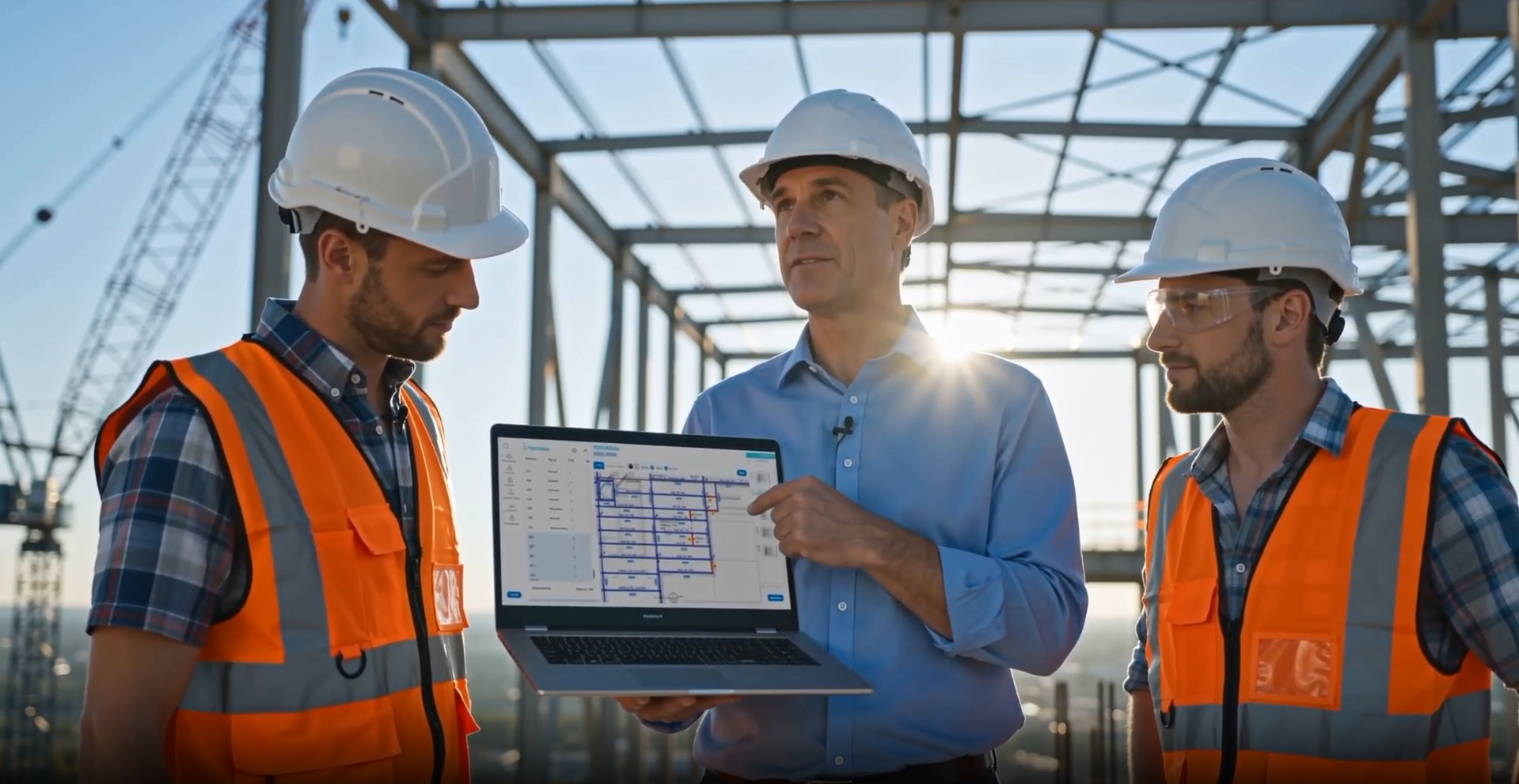
In day-to-day work, that means manual counting that would take hours is done in minutes, and estimators still check and correct, but they start from a high-quality baseline instead of a blank page.
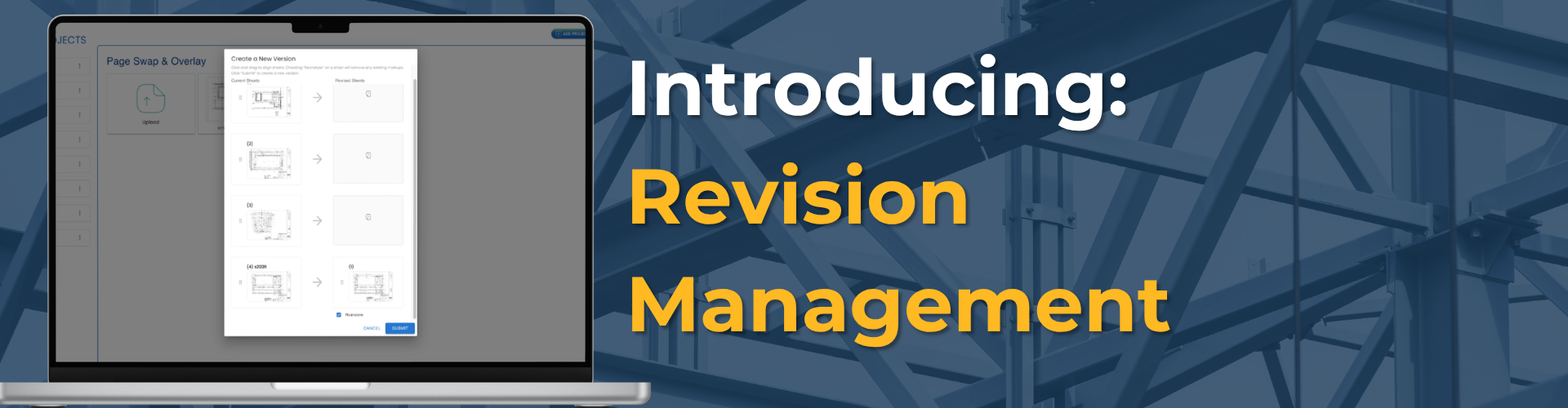
For a quick visual of the workflow, see the 2-minute LIFT demo.
For steel estimators, the question is not "Can AI be perfect?" but "Is AI accurate enough to trust as a starting point, with human review?"
The research-grounded answer: yes, in the 95-99% range on clean drawings, with the caveat that the human review needs to be active, not passive. The MDPI review's warning about automation bias is the real risk. Estimators who stop checking the AI output because it has been good for a few weeks will eventually miss the case where it was wrong.
Practical guidelines:
With LIFT specifically:
When handled this way, AI breaks the old speed-accuracy trade-off. You get near-manual accuracy at a fraction of the time, so you can bid more work without lowering your standards. For the broader case on how this multiplies estimator capacity, see How AI Multiplies Estimator Capacity (With Real Examples).
The first step is simple. Run an upcoming bid through LIFT in parallel with your current process, compare speed and accuracy against your baseline, and decide where AI fits in your workflow. You can start by booking a live demo.