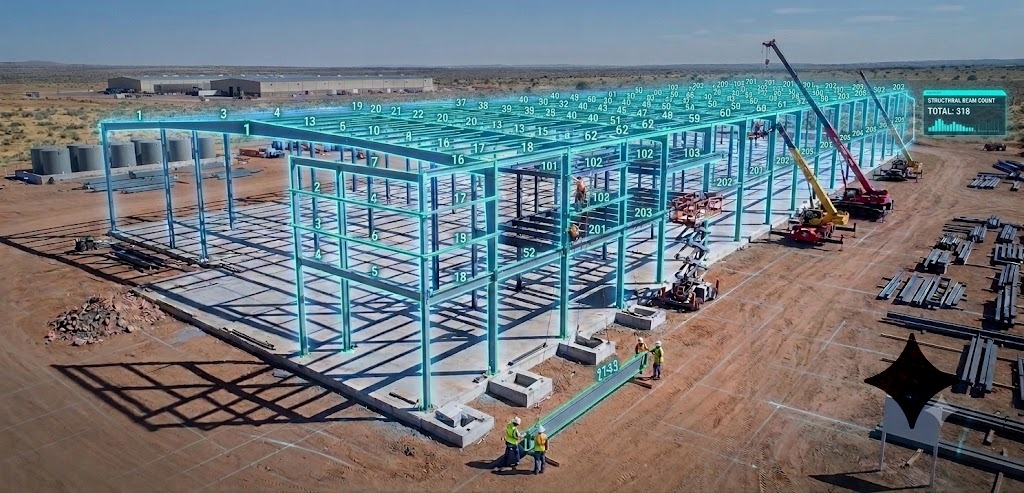


This article lays out, in practical terms, what AI is genuinely good at in steel estimating, where it struggles, and how smart shops are designing hybrid workflows that combine machine speed with human judgment. It sits under The Ultimate Guide to Steel Estimating: Best Practices for Fabrication Success, which covers the full estimating process from drawings to final bid. Think of this as the expectations manual for the AI portion of that workflow.
Where AI Actually Helps Today
Modern AI in steel estimating is very capable in a few specific areas: reading structural drawings, counting elements, and standardizing repetitive tasks.
1. Reading and Counting From Structural Drawings
Well-trained computer vision models can now:
- Detect beams, columns, braces, and common connection symbols on typical structural plans
- Read nearby size labels (e.g., W12x26) and associate them with members
- Convert geometry into lengths, counts, and preliminary weights
In practice, this means an AI-powered tool can compress the initial counting phase of a mid-size structural package from several hours to under an hour, especially on clean PDFs. This is the same capability described in How AI Reads Structural Steel Drawings: The Complete Guide for Modern Estimators.
When AI tools correctly read sizes, grades, and camber from your drawings, they’re effectively helping you build a more reliable input set for applying the design assumptions and detailing practices found in the AISC Steel Construction Manual and related AISC connection standards.
2. Handling Repetitive and High-Volume Takeoff
AI does best when the work is repetitive and pattern-based. Examples:
- Large bays of similar beams in warehouses or distribution centers
- Long runs of framing in parking structures or multi-bay frames
- Standardized connection details repeated across a grid
Here, AI’s consistency and stamina matter. It will not lose track of gridlines, miscount a row, or skip a bay out of fatigue. This supports the time savings and capacity lift discussed in the Ultimate Guide when comparing manual vs. AI-assisted takeoff.
3. Standardizing Baseline Quantities Across Estimators
Every estimator has a signature. Some are conservative on tonnage; others are aggressive. AI tools can give shops a common baseline:
- The model applies the same detection logic to every job
- Different estimators start from the same preliminary quantities
- Variance in final pricing comes from strategy, not missed members
This helps owners compare bids and performance more reliably over time, a theme that aligns with the “estimated vs. actual” tracking recommended in the Ultimate Guide.
Where AI Still Struggles
AI is powerful, but not a replacement for an experienced steel estimator. There are clear limits that show up in real projects.
1. Poor-Quality Drawings and Edge Cases
AI performance drops when drawings move away from clean, digital exports:
- Low-resolution scans
- Heavy markup, coffee stains, or scan artifacts
- Non-standard or hand-drawn symbols
Models trained on millions of examples still rely on recognizable patterns. When information is obscured or distorted, the AI may miss members, misread labels, or fail to understand unusual conditions. This is one reason the Machine Learning in Construction: How SketchDeck Gets Smarter Over Time article emphasizes continuous learning and human-in-the-loop feedback.
2. Interpreting Intent, Risk, and Business Context
AI can read text; it cannot infer implications the way a senior estimator does:
- “FIELD VERIFY” suggests potential delay and risk, not just a note
- “TYP UNO” requires understanding where exceptions will likely appear
- Shop constraints (door sizes, crane capacity) and GC behavior patterns are invisible to the model
These factors drive decisions about contingency, schedule risk, and margin, core topics in the Ultimate Guide to Steel Estimating that still require human judgment.
A model might correctly read a weld symbol but still miss the implications of tougher inspection regimes or code requirements under the AWS D1.1 Structural Welding Code or D1.8 for seismic applications, areas where an experienced estimator and welding coordinator remain essential.
3. Pricing Strategy and Project Selection
AI can produce a detailed bill of materials and even suggest labor hours based on patterns. It cannot:
- Decide which projects fit your current capacity or risk appetite
- Choose when to pursue a lower-margin job for strategic reasons
- Balance hit rate, relationship value, and backlog health
Those decisions depend on your shop’s goals, financials, and market position. The AI can support by giving you accurate inputs faster, but it does not select your work or set your margins.
Designing a Hybrid Workflow: AI + Human Estimator
The most effective shops treat AI as a junior estimator, not as an autopilot. They design workflows that let the model do the mechanical work while people handle judgment, exceptions, and strategy.
1. Let AI Handle the First Pass Takeoff
A typical high-performing workflow looks like this:
- Upload structural PDFs to an AI-based tool
- Let the system detect and count members, connections, and key notes
- Use confidence scores or flags to see where the model is uncertain
This aligns directly with the “Stage 4: AI-powered automation” section in the Ultimate Guide, where the goal is to move estimators off raw counting and into review and pricing.
2. Use Estimators for Review, Adjustments, and Strategy
Estimators then spend time where their expertise matters most:
- Reviewing low-confidence detections and complex connections
- Checking scope, sequencing, and constructability
- Applying shop-specific labor factors, vendor pricing, and margin strategy
Machine Learning in Construction: How SketchDeck Gets Smarter Over Time explains how these corrections also train the model, improving accuracy on future jobs.
3. Connect Takeoff to the Rest of the Estimating Stack
AI is most valuable when its outputs feed directly into your broader estimating process:
- Quantities flowing into material pricing modules or spreadsheets
- Member and connection data feeding labor estimating templates
- Consistent structure for comparing estimated vs. actual performance over time
This is the integration pattern described in the Ultimate Guide, where estimating, detailing, and production data reinforce each other.
Even with highly accurate quantities, safe and efficient erection still depends on human planning that accounts for crane limits, site constraints, and compliance with OSHA steel erection safety requirements. AI can surface the tonnage and piece counts, but it does not design the erection plan.
Common Misconceptions About AI in Steel Estimating
Several myths come up repeatedly in vendor demos and internal discussions. Clarifying them helps set the right expectations.
Misconception 1: “AI Will Replace Our Estimators”
AI can reduce takeoff time by 50–80% on suitable projects, but it does not:
- Call out drawing conflicts between architectural, structural, and shop drawings on its own
- Decide which RFIs to send or how to frame them
- Weigh bid deadlines against current backlog and staffing
Real-world case studies (SSE Steel, MSE, King Steel) show that AI-equipped teams increase bid capacity and responsiveness; they do not shrink estimating teams. This is consistent with capacity and ROI examples in the Ultimate Guide.
Misconception 2: “If AI Is Involved, It Must Be 100% Accurate”
No system is perfect, manual or AI-based. The goal is higher, more consistent accuracy with less time spent:
- Legacy automation often tops out around 60–80% detection accuracy on real drawings
- Well-trained AI models can reach 95–99% detection accuracy on standard components
- Human review is still required, but now focused on the 1–5% of items that are unclear
The Precision Gap: Why “Automated” Takeoff Software Is Failing Steel Estimators goes deeper into this difference between pixel-matching tools and context-aware AI.
Misconception 3: “If It Says ‘AI’ On The Box, It All Works the Same”
Vendors use “AI” to describe very different capabilities:
- Simple rules or pattern-matching branded as AI
- Limited models trained on a small set of generic drawings
- Full computer-vision pipelines trained on millions of structural steel examples
Your evaluation criteria should come from the work you do every day: can the system handle your drawing quality, connection complexity, and project mix, as outlined in your current estimating framework? The Ultimate Guide gives a useful checklist for aligning tools with your process.
How to Evaluate AI Tools for Your Shop
When you bring AI-based estimating tools into a demo or pilot, test them against the realities of your work, not just a polished sample project.
Use Your Own Drawings, Not Demo Sets
Upload:
- Older scans with markups
- Projects with mixed framing types and tight details
- Jobs where you know, from experience, that certain members or notes are easy to miss
Then compare the AI’s output against your existing estimates and the principles in the Ultimate Guide (e.g., completeness of scope, connection coverage, and risk items).
Measure More Than Speed
Speed matters, but it is not the only metric:
- Detection and attribute accuracy by member type and connection
- Time required for review and correction
- Ease of exporting data into your current estimating tools and templates
These are the same dimensions that drive ROI in your broader estimating operation, time savings, capacity, accuracy, and margin protection, as outlined in the pillar article.
Aligning AI With Industry Standards and Best Practices
AI-assisted estimating is most useful when its outputs are consistent with the detailing, connection, and safety practices defined by industry bodies and recognized frameworks.
When you leverage AI to accelerate takeoff, ensure your workflow still reflects:
- Design and connection standards from AISC connection standards
- Welding code compliance under the AWS D1.1 Structural Welding Code
- Current industry research on fabrication efficiency and best practices published in Modern Steel Construction Magazine
For fabricators who routinely bid pre-engineered metal buildings, AI-generated quantities still need to be interpreted through the lens of project specifications and metal building standards from MBMA and related system guidelines.
Many of the productivity and detailing approaches shops use alongside AI-assisted takeoff are informed by industry research on steel fabrication efficiency and long-running case studies published in the magazine.
Further Reading on AI in Steel Estimating
To see how this expectations framework fits into the rest of your estimating operation, these articles connect the dots:
- The Ultimate Guide to Steel Estimating: Best Practices for Fabrication Success – Complete workflow from drawings to final bid, with templates, checklists, and margin protection strategies.
- How AI Reads Structural Steel Drawings: The Complete Guide for Modern Estimators – Detailed explanation of how computer vision models interpret structural plans.
- Machine Learning in Construction: How SketchDeck Gets Smarter Over Time – How human corrections train the model and reduce errors on future jobs.
- The Precision Gap: Why “Automated” Takeoff Software Is Failing Steel Estimators – Comparison of legacy automation and AI-driven tools in real estimating workflows.
See What AI Can Do With Your Drawings
Understanding AI’s limits is useful. Seeing it work on your own projects is better.
Book a Demo with SketchDeck.ai and bring one of your recent bid packages:
- Watch an AI-powered takeoff complete in minutes instead of hours.
- Compare the results against your current process and the benchmarks in the Ultimate Guide to Steel Estimating.
- Decide where AI fits in your estimating workflow, and where your team’s judgment should stay in control.