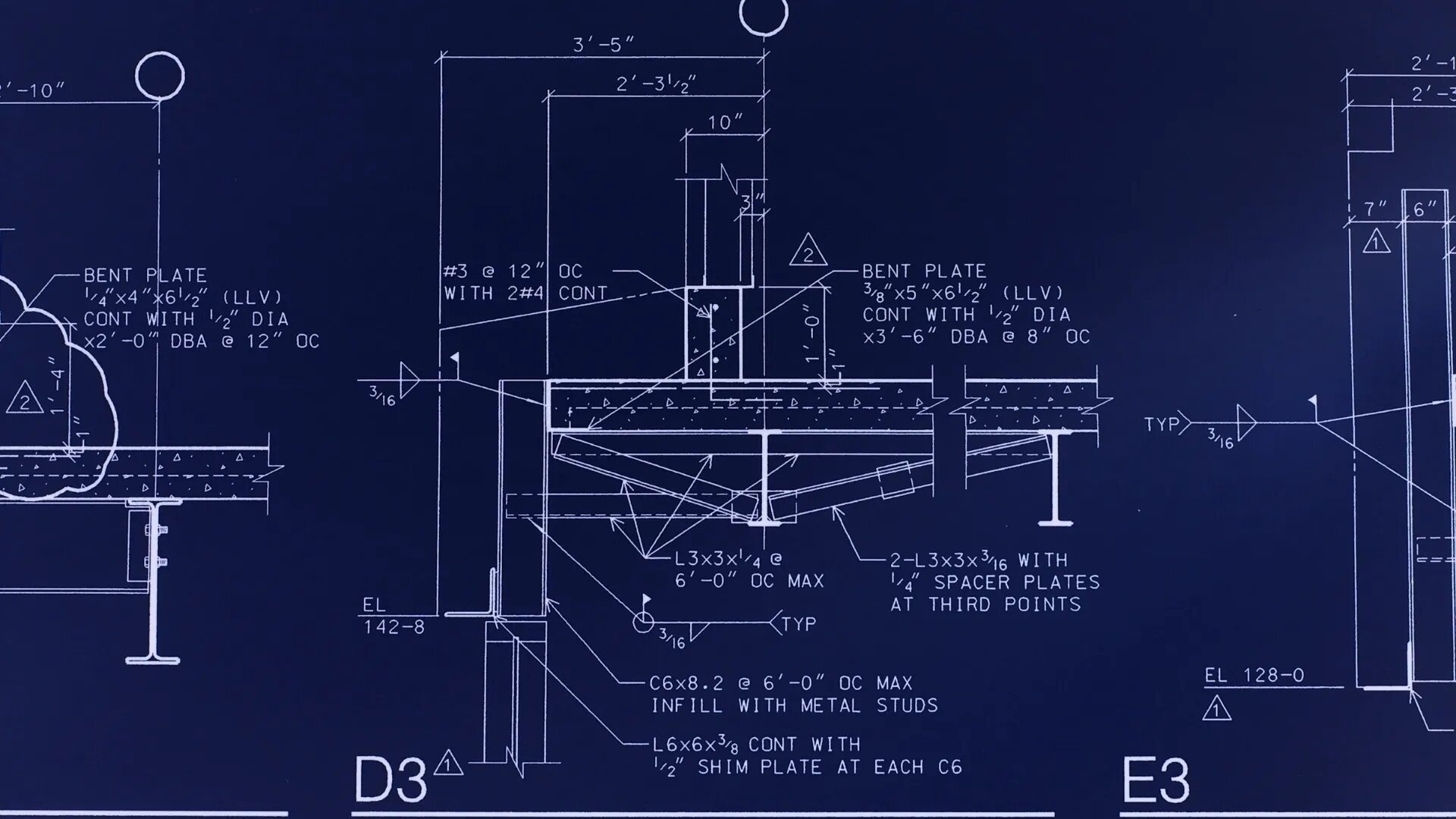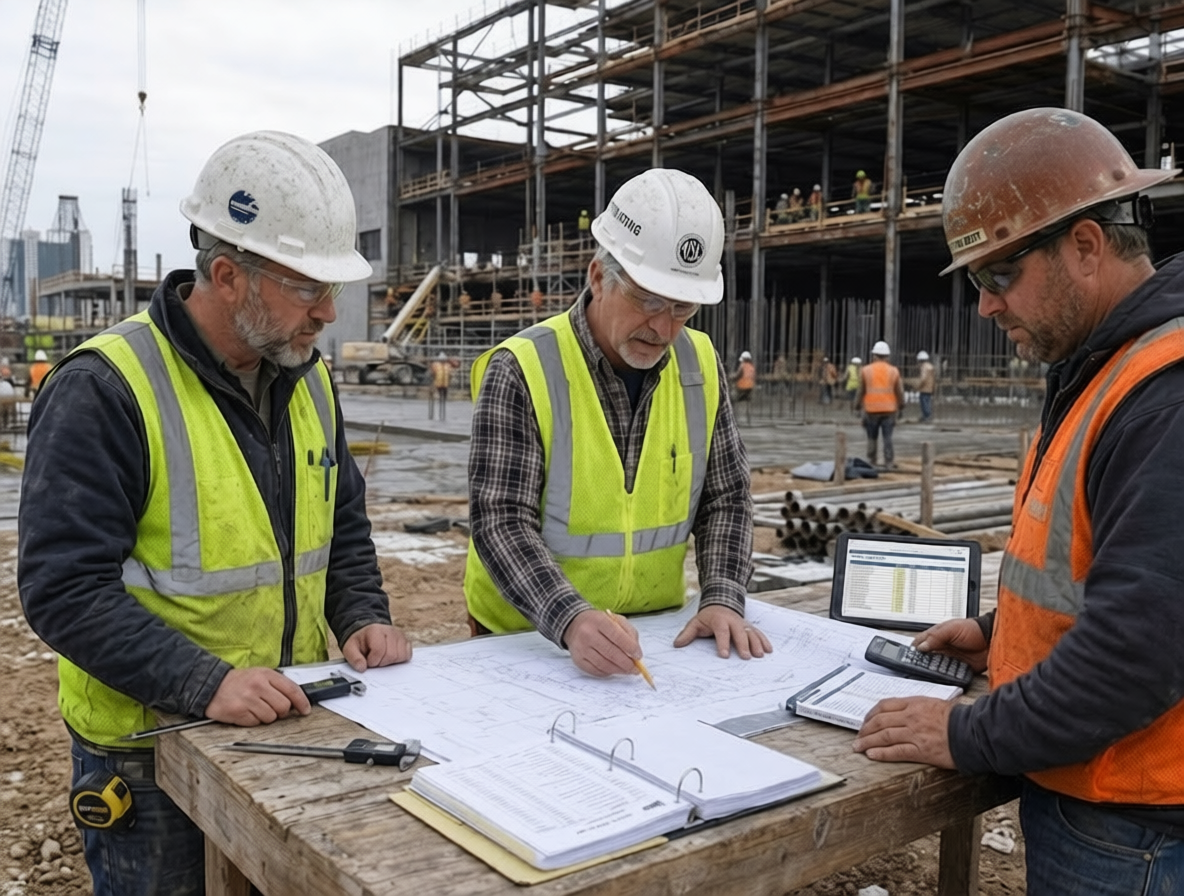

Every estimator has lost time to a file named something like "Final_FINAL_v3_USE THIS ONE." Twenty minutes searching for the right version. An hour spent updating the wrong file. The discovery, mid-bid, that the drawings on your screen are not the ones the engineer issued yesterday. This is not an individual discipline problem. It is a workflow problem that organized estimating departments solve at the system level.
The financial case for solving it is well-documented. McKinsey Global Institute's research on knowledge worker productivity finds that the average interaction worker spends nearly 20% of the workweek looking for internal information or tracking down colleagues who can help with specific tasks. For an estimating department running on bid deadlines, that lost time is exactly the capacity that could have gone toward submitting another bid.
This article walks through the organizational systems experienced estimators use to make takeoffs fast, version-controlled, and team-ready. It applies whether you are working in spreadsheets and folders, digital takeoff software, or AI-powered platforms like LIFT. The technology changes the speed; the organizational discipline stays the same.
This article sits under Building a High-Performance Steel Estimating Workflow and is the practical companion to the workflow design covered in the pillar.
The 20% of workweek time McKinsey identified across knowledge workers is consistent with what estimators experience daily. The cost shows up in four places.
Time lost searching for files. Even ten minutes per bid spent looking for the right version of a takeoff, across 100-300 bids per year, adds up to meaningful capacity. That is time that could have gone toward the bid itself, toward review discipline, or toward responding to one more RFQ.
Rework from wrong versions. Discovering at hour eight of takeoff that you have been working from a stale drawing set is the most expensive type of organizational failure. Per the Construction Industry Institute, rework represents between 2% and 20% of total project costs, with an average of 12%. Not all rework traces to disorganized files, but version-control failures sit in the same chain. Catching version mistakes at intake is cheap; catching them at bid review is expensive; catching them after award is catastrophic.
Duplicate work. When team members cannot find an existing takeoff or template, they rebuild from scratch. The work is being done twice, paid for twice, and contributing capacity only once.
Missed opportunities. Slow takeoff cycles compress the bid window for the projects that matter most. Shops that spend hours per bid on file management bid fewer projects than shops that spend minutes.
The math is simple. The BLS Occupational Outlook Handbook puts the median annual wage for cost estimators at $77,070, or $37.05 per hour, as of May 2024. Loaded with benefits and overhead at the typical 1.3-1.5x multiplier, the fully loaded cost lands in the $48-$56 per hour range. Every hour an estimator spends searching for files is an hour of that loaded cost not going toward the bid.
The fix is not to ask estimators to work harder. It is to design a system that makes the search problem disappear.
Folder structure is the backbone of organized takeoffs. Get this right and everything else becomes easier.
Tier 1: Project status. Three main folders that immediately tell you what needs attention:
01_Active_Bidding02_Awarded_Projects03_ArchiveTier 2: Individual projects. Within each status folder, project folders use a date-prefixed naming convention so the most recent projects are always at the top of any directory view:
[Date]_[Project Name]_[Client]
Example: 2026-12-15_Warehouse_ABC_Corp
Tier 3: Project components. Inside each project folder, numbered subfolders force consistent ordering across all projects:
01_Drawings02_Takeoffs03_Estimates04_RFIs05_Correspondence06_ExportsThe numeric prefix is important. Without it, alphabetical sorting puts "Takeoffs" between "Reports" and "Exports," and your team is permanently fighting the file explorer.
Never overwrite files. Use version numbers in the filename:
Warehouse_Takeoff_v1.0.xlsxWarehouse_Takeoff_v1.1.xlsxWarehouse_Takeoff_v2.0_FINAL.xlsxMajor versions (1.0, 2.0, 3.0) indicate significant changes such as a drawing revision or scope change. Minor versions (1.1, 1.2) indicate corrections or additions within the same drawing set.
Keep old versions in a _Previous_Versions subfolder. You will thank yourself when someone asks what changed between bids two months later.
For more on how revision management works in a structured AI workflow, see LIFT-Delta: Introducing Revision Management.
Poor file names create chaos. Good file names create clarity.
Use this format for all takeoff files:
[Project]_[Document Type]_[Date]_[Version]_[Status]
Examples:
WarehouseABC_Takeoff_2026-12-15_v1_DRAFTWarehouseABC_BOM_2026-12-16_v2_FINALWarehouseABC_ConnectionSchedule_2026-12-17_v1_REVIEWWhy this works:
Never use these in filenames:
/ \ ? < > * | "These cause problems when sharing files between systems or operating systems. The discipline takes one week to learn and saves frustration for years.
Context switching is one of the largest hidden costs in estimating departments. Batching similar tasks reduces the cognitive overhead of constantly jumping between project types.
A structured Monday morning that sets the tone for the week:
Early morning: Drawing collection. Download all new drawings, check for revisions, organize into project folders, and print overview sheets if needed.
Mid-morning: Quick takeoffs. Process all small projects (under a defined tonnage threshold for your shop). Use templates for standard buildings. Flag complex items for afternoon review.
Late morning: Deep work on complex takeoffs. Focus on one large project. No interruptions allowed. Complete all structural elements in a single sitting.
Early afternoon: Review and verification. Check the morning's work, verify quantities against historical data, run peer reviews on complex items.
Late afternoon: Export and communication. Generate all BOMs, update estimate spreadsheets, send RFIs in one batch.
The principle is consolidation: each block of the day has one cognitive mode, not five. The estimator's brain is not constantly switching contexts, which is where most of the productivity loss in unstructured work happens.
Instead of completing each takeoff fully before moving to the next, run two passes across all active bids:
Pass 1: Rough quantities. Count main members only, get approximate tonnage, identify complexity level. This is fast and gives you a portfolio view of what is in your active bid window.
Pass 2: Detailed completion. Allocate time based on complexity and on probability of winning. Simple projects need an hour or two. Medium projects might need three to four hours. Complex projects might need a full day.
This method lets you quickly assess all active projects, then allocate your most expensive hours to the bids where they will have the most impact.
Your software setup determines your speed. The configurations below pay for themselves quickly.
Two-monitor setup:
If you have a single screen, use Windows Snap or macOS Split View to see both simultaneously. The constant alt-tabbing between drawings and takeoff is one of the most underappreciated drains on estimator speed.
Create templates for the project types your shop bids most often. Each template should include pre-built formulas, standard connection types, typical miscellaneous percentages, and labor factors by project type.
Common scenarios worth templating:
The templates do not need to be perfect on day one. They need to exist and improve every project. The discipline is to update the template after every won bid based on what you learned.
Stop copying data manually between programs. Every manual transfer is an error opportunity and a time cost.
A reasonable target integration path:
The exact integration depends on your stack, but the principle is: every manual data transfer you eliminate removes both time and error risk.
Drawing revisions cause more estimating errors than any other single factor. The discipline below is what catches them.
Step 1: Initial notification. Flag the email immediately. Add to the revision log. Schedule review time on the calendar.
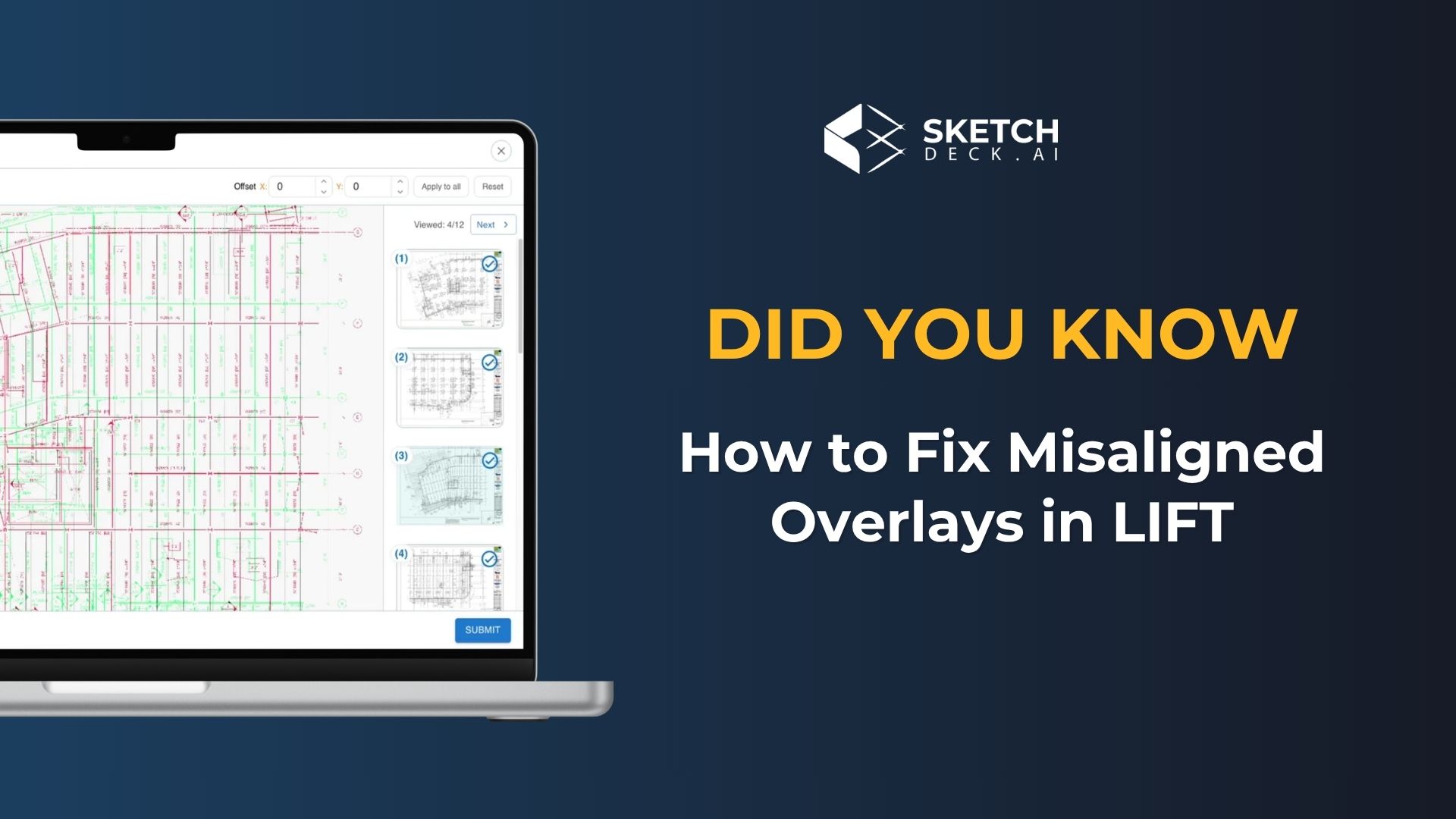
Step 2: Download and compare. Save to a _Revisions subfolder. Run the comparison overlay if your software supports it. Highlight every change.
Step 3: Update and verify. Update the takeoff with changes. Document what changed. Notify the team of impacts.
Never skip a step. Each one prevents costly errors. This is the workflow problem LIFT-Delta was built to solve at the tool level.
Maintain a simple spreadsheet with:
This log becomes invaluable during scope disputes or client clarifications later. It is also useful institutional knowledge for newer estimators learning how revisions affect bids.
Wondering whether your team is ready to systematize this process? 5 Signs Your Steel Estimating Process Is Ready for an AI Transformation is a quick gut-check.
When multiple estimators work on projects, organization becomes critical.
Before handing off a takeoff to another estimator, complete these steps:
The receiving estimator should:
The discipline takes 15 minutes per handoff. It prevents the kind of "I thought you had updated that" misunderstanding that quietly costs hours and dignity.
Implement a simple system to prevent simultaneous editing:
Warehouse_Takeoff_v2_JD_WORKINGWORKING.Microsoft Teams and SharePoint handle this automatically when configured with co-authoring. For shops without those tools, the manual convention works on any file system.
Organization requires maintenance. Schedule 30 minutes every Friday for the five tasks below.
1. Archive completed projects. Move won and lost bids from Active to Archive. This keeps the Active folder lean.
2. Delete duplicate files. Search for "copy" and "backup" in filenames. Delete unnecessary duplicates.
3. Update templates. Incorporate lessons learned into your templates. Small improvements compound across many bids.
4. Clear the Downloads folder. This becomes a dumping ground for everyone. Sort files into proper locations or delete them.
5. Backup everything. Run your backup system. Verify it completed successfully. Test one random file restoration.
The routine takes 30 minutes. It prevents small messes from becoming big problems.
Track these metrics to verify your system is working.
Time-based metrics:
Accuracy metrics:
Productivity metrics:
If you are not seeing improvement, identify the bottleneck and adjust the system. Most organizational systems fail because the structure was perfect on paper and never updated based on what the team actually did.
Master these shortcuts to shave hours off your week.
Windows file management:
Win+E: Open File ExplorerF2: Rename selected fileCtrl+Shift+N: Create new folderAlt+Tab: Switch between programsExcel power moves:
Ctrl+D: Fill downCtrl+R: Fill rightCtrl+`: Show formulasCtrl+Shift+L: Add filtersPDF navigation:
Ctrl+F: Find textCtrl+G: Go to specific pageAlt+Left/Right: Previous/Next viewCtrl+0: Fit to pageA single learned shortcut, used 30 times per day, recovers measurable time across a year.
AutoHotkey (Windows) or Keyboard Maestro (macOS). Create custom shortcuts for repetitive tasks like folder creation or standard reply templates.
Batch file renaming utilities. Tools like Bulk Rename Utility process hundreds of files in seconds. Useful for standardizing downloaded drawings.
Cloud sync services. Dropbox, OneDrive, or Google Drive ensure your organized files are accessible everywhere and automatically backed up.
For more on the broader case for automation in steel estimating, see The Hidden Economics of Steel Takeoffs: Why Smart Fabricators Are Switching to AI Construction Estimating Software.
Manual organization works. AI-powered tools eliminate large categories of organizational work entirely.
Centralized project storage. LIFT keeps all project files in one platform, accessible to the whole team. No more folder hunts across local drives and shared network locations.
Automatic version tracking. Every takeoff has a clear history. No more "v3_FINAL_USE_THIS_ONE" conventions; the system tracks versions automatically.
Built-in revision management. Upload new drawings, and LIFT identifies the changes. The revision protocol becomes a few clicks instead of a multi-step manual process. For more, see LIFT-Delta: Introducing Revision Management.
Instant search across projects. Find any project, any drawing, any BOM in seconds. The McKinsey 20% workweek search time drops substantially when the system actually knows where things are.
Direct exports to estimating systems. Reduces the manual file transfer between tools that creates both errors and friction.
Real-time team collaboration. Multiple estimators can work on different parts of the same project without version conflicts.
The customer pattern is consistent across published case studies. MotionSteel went from 30-40 estimates per month to about 70 estimates per month with the same team, with the freed time coming from eliminating the file-management and re-takeoff work that used to consume estimator hours. Read the full MotionSteel case study. MSE documented up to 95% reduction in time spent on beam takeoffs, with most of the time savings going toward more productive bid work. Read the MSE case study.
For more on what this kind of capacity multiplication looks like in practice, see How AI Multiplies Estimator Capacity (With Real Examples) and Breaking the Headcount Barrier: Scaling Bids Without Hiring.
Transform your takeoff process in one month with focused weekly priorities.
Week 1: Foundation. Implement the folder structure. Establish naming conventions. Clean up existing files. Create your first templates.
Week 2: Workflow. Try batch processing. Set up your workspace. Master keyboard shortcuts. Install automation tools.
Week 3: Team systems. Implement the handoff protocol. Train the team on the new standards. Set up the revision process. Configure collaboration tools.
Week 4: Optimization. Measure your metrics. Identify bottlenecks. Refine templates. Document what works.
Track your time savings each week so the team sees the improvement. Most shops see noticeable capacity gains by week four, with the compounding benefits continuing for months as templates and habits mature.
Every minute saved on organization is a minute gained for winning more work. The McKinsey research is clear: knowledge workers lose ~20% of the workweek to looking for internal information. For estimating departments running on bid deadlines, that lost time is exactly the capacity you cannot afford to give up.
The fix is not heroics. It is system design. The folder structure, file naming convention, batch processing, version control, handoff protocol, and weekly maintenance routine in this article are how organized estimating departments run. The team that adopts them will spend less time searching and more time bidding.
If you want to test what AI-powered organization looks like on your projects, the simplest move is to run an upcoming bid through LIFT in parallel with your current process and see where the file management and revision handling overhead disappears. You can start by booking a live demo.